Drawing

- Artist: Henry Moore OM, CH
- Date: 1935
- Medium: Chalk, charcoal and watercolour on paper
- Dimensions: support: 343 x 419 mm
- Museum: Tate Britain
- Collection record: Tate Britain website
Listen to the free audio guide
About this artwork
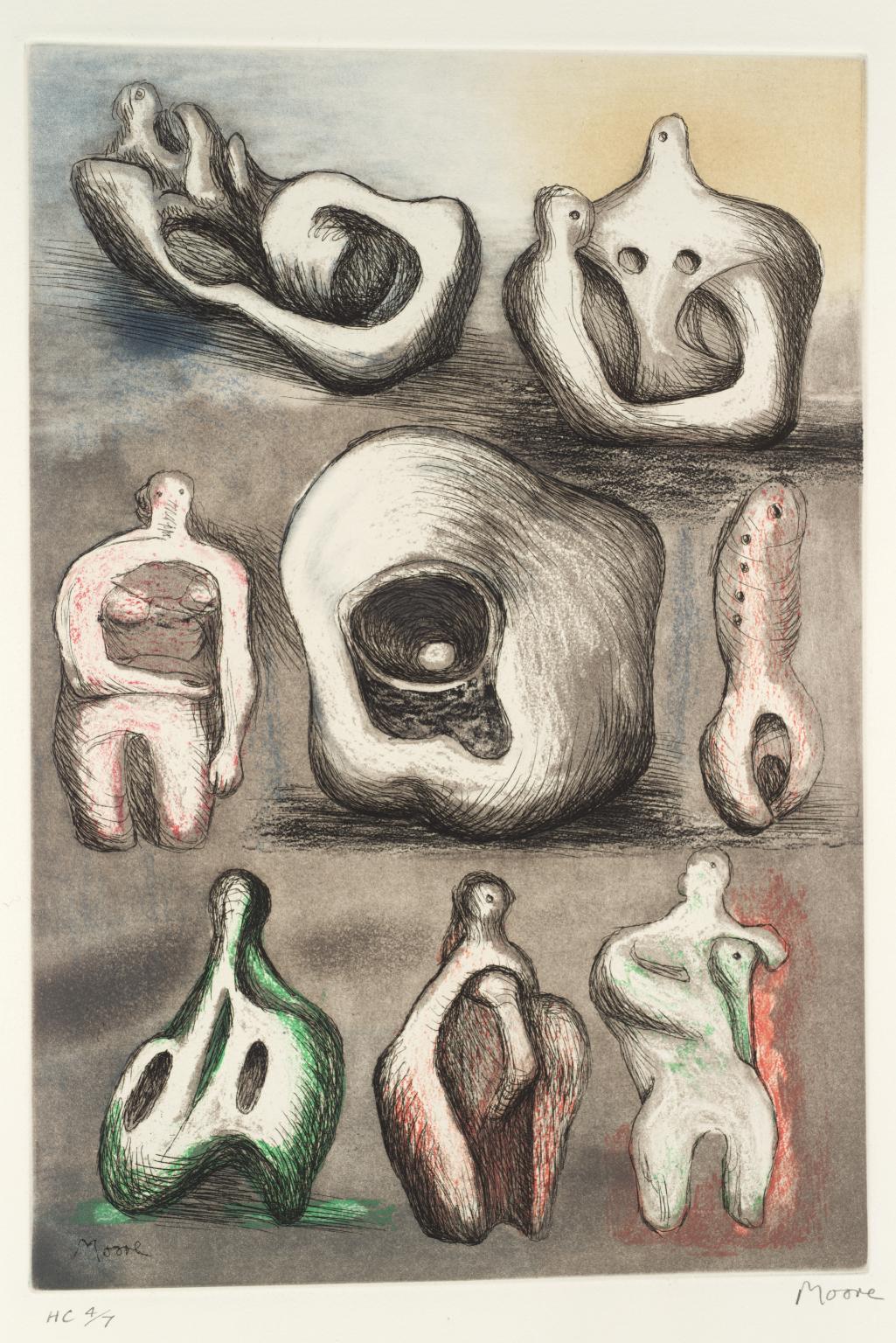
This is the “Drawing” by Henry Moore, created in 1935. The piece is a study in chalk, charcoal and watercolour on paper, a medium that lets him capture fleeting gestures. The work shows a blend of abstraction and the human figure—you can see the suggestion of a body, but it’s broken into geometric, irregular shapes, a hallmark of Moore’s experimentation with non‑representational forms during the 1930s.
Moore signed the piece “Moore 35”, a small inscription that also hints at the year. It first appeared in the Zwemmer Gallery in late 1935, part of a group of drawings that would influence the British art scene. The work was later held in a 2005‑2007 loan exhibition titled “Henry Moore and the Challenge of Architecture”, and in 2013’s “Tracing the Century”. In 2019 it was displayed in the Henry Moore Foundation’s “Henry Moore Drawings” show.
What’s striking is how the drawing balances gesture and abstraction—the loose lines and washes create a sense of movement, while the underlying forms suggest the human body. It’s a great example of Moore’s early shift from representational to abstract, and it still feels fresh because of the immediacy of the medium. Take a moment to notice how the charcoal’s darker edges contrast with the lighter washes, giving the drawing depth and a sense of three‑dimensionality on a flat surface.
See it in person
Drawing is in the collection of Tate Britain on Millbank, London — free to enter. Point your phone at any artwork there and audioguide.london plays a free audio guide in six languages — no app download needed.