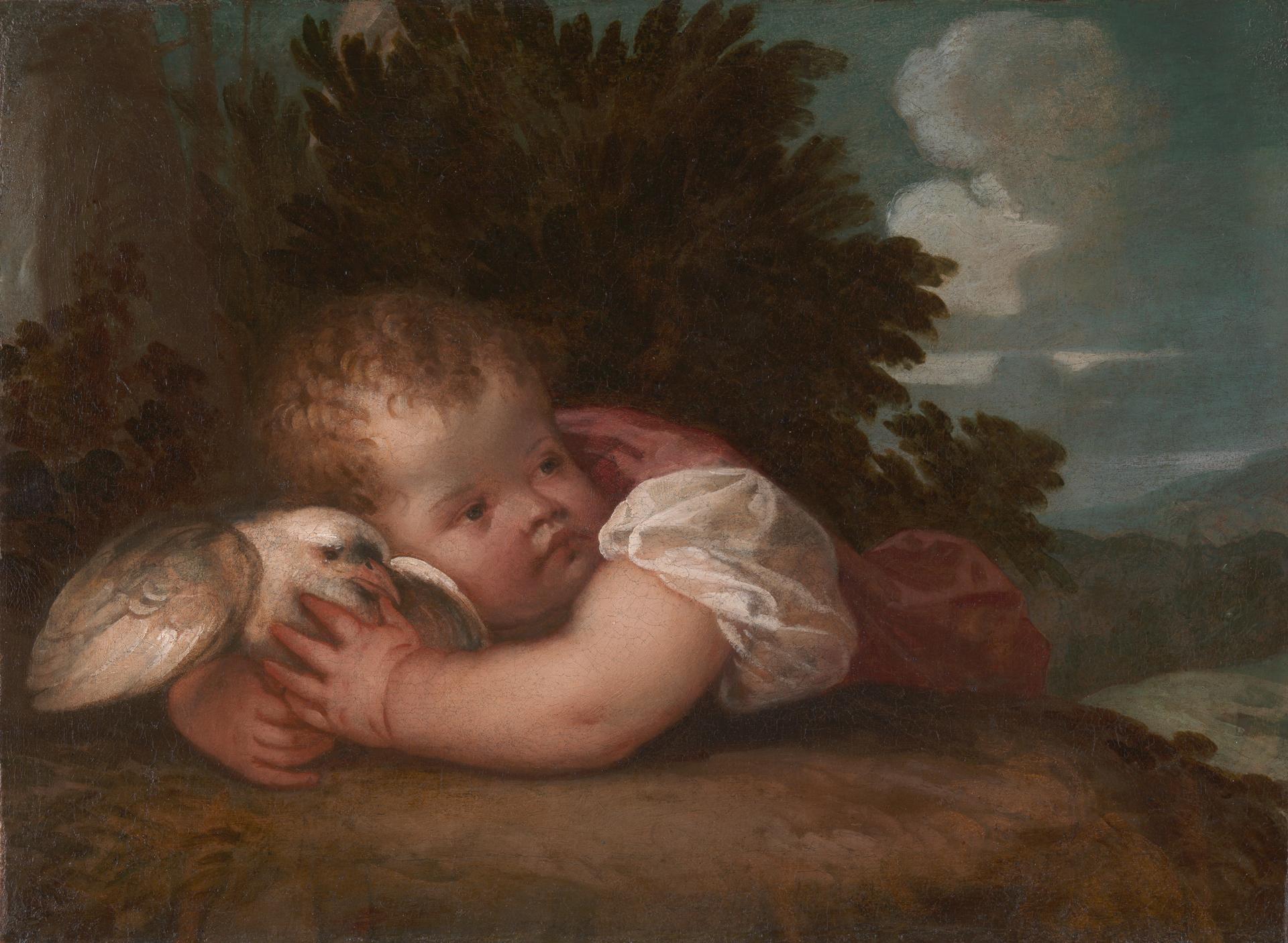
A Boy with a Mousetrap

- Artist: Adriaen van der Werff
- Date: about 1678-9
- Medium: oil on wood
- Museum: The National Gallery
- Collection record: The National Gallery website
Listen to the free audio guide
About this artwork
This is "A Boy with a Mousetrap" by Adriaen van der Werff, painted in the Dutch north around the late 1670s. The boy's other hand covers the mousetrap, but it's not about celebrating the catch of a pest. Instead, his wistful expression suggests he's lost in thought, daydreaming about something or someone far away.
Notice how he's dressed in clothing that's out of style for the time period when he was painted. The white shirt and brocade doublet are from the sixteenth century, while the feather in his hat and long black curls are more characteristic of the late 1670s. This blending of styles is quite deliberate and adds to the sense of dreaminess.
The painting is meant as a moral lesson, or perhaps even entertainment. It's possible that Adriaen van der Werff was commenting on the dangers of overindulgence in love. The image of a mouse and mousetrap was a common symbol for this idea, used by poets and writers of the time to caution against excessive passion.
We don't know who commissioned this painting, but it's clear that Adriaen van der Werff was still finding his footing as an artist at this point in his career. He would go on to become a successful court painter later in life.
See it in person
A Boy with a Mousetrap hangs in The National Gallery on Trafalgar Square, London — free to enter. Point your phone at any artwork there and audioguide.london plays a free audio guide in six languages — no app download needed.